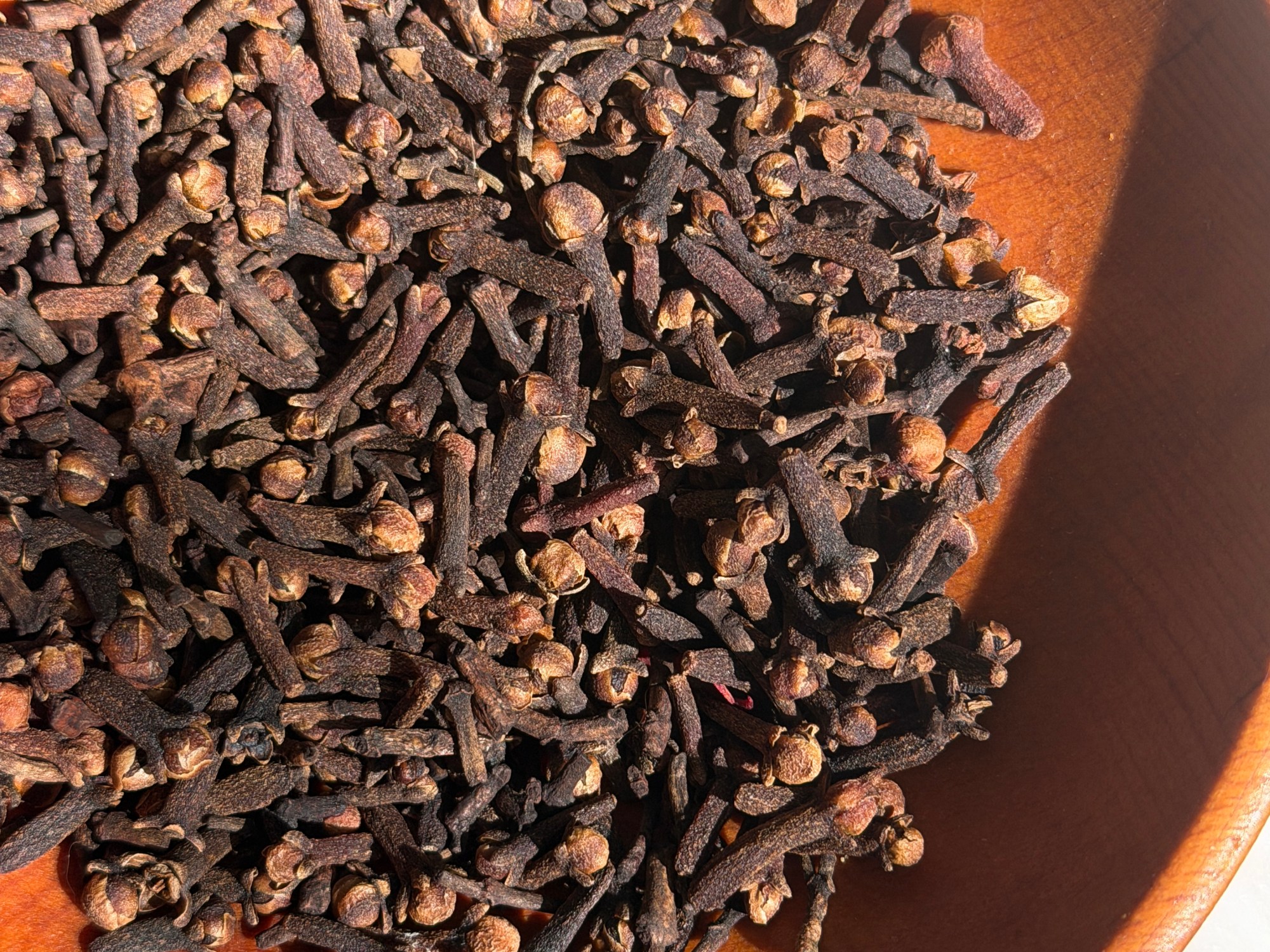
Clove – this beautiful spice is one of the most aromatic and powerful spices in the world, valued for centuries in trade, medicine, and cuisines. The story of Cloves traverses the Spice Islands of Indonesia to royal courts in China, Ayurvedic traditions in South Asia, and the richly layered kitchens of Kashmir.
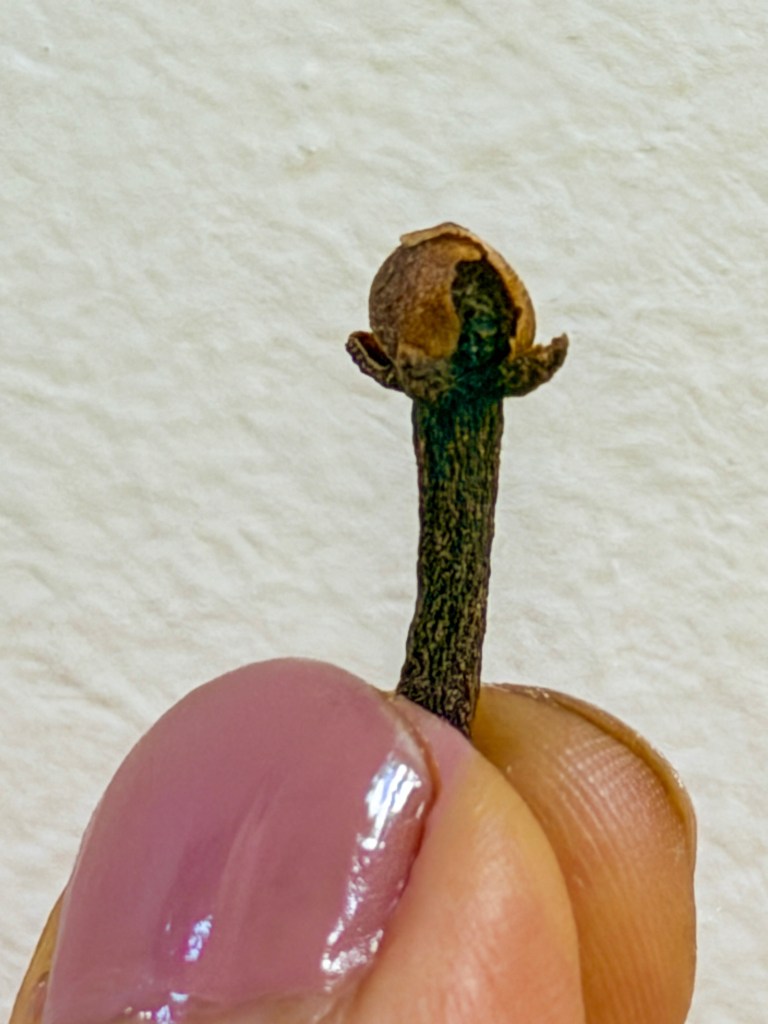
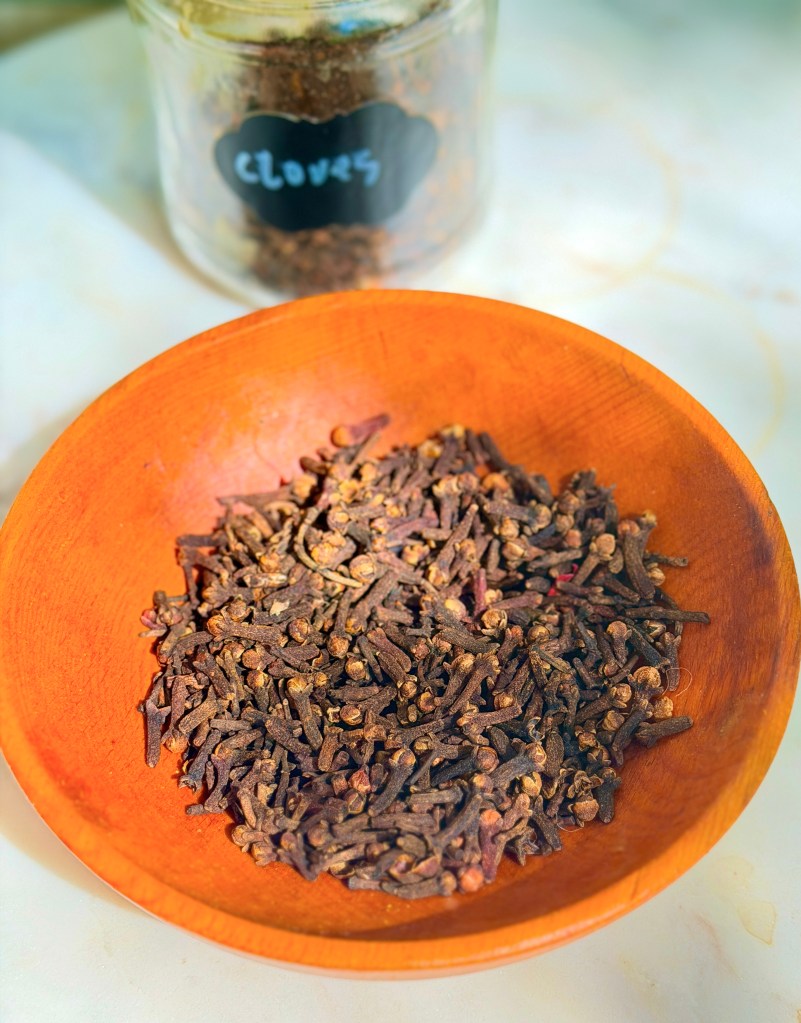
The name ‘clove’ is derived from the Latin word clavus, meaning ‘nail’, which describes the nail-like shape of the dried flower buds.
The story of Cloves
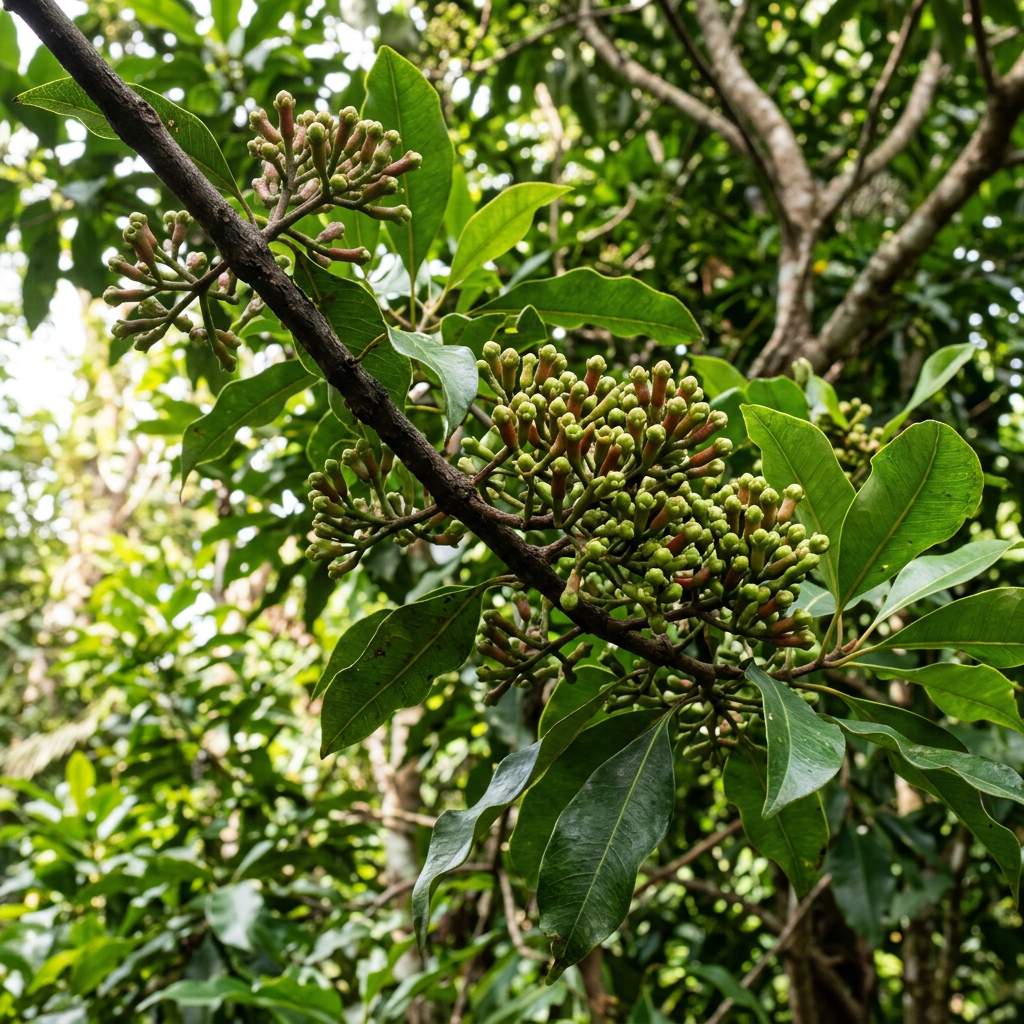
Cloves come from the flower buds of Syzygium aromaticum, a tree native to the Maluku Islands, also known as the Spice Islands, in Indonesia.
The oldest evidence of cloves in the West comes from 1721 BCE in Terqa, Syria.
Cloves were among the earliest spices to travel across the Indian Ocean trade network, and by around 200 BCE, Chinese records already mention cloves being brought to court and held in the mouth to freshen breath before speaking to the emperor.
By the 10th to 12th centuries, cloves were already being traded in Sri Lanka, showing how deeply they had entered the wider Asian spice economy. In later centuries, cloves became one of the most coveted spices in Europe, where they were prized for both flavor and medicine, and they played a major role in the era of spice monopolies and colonial trade.
For the love of Clove
What do we love about Cloves??
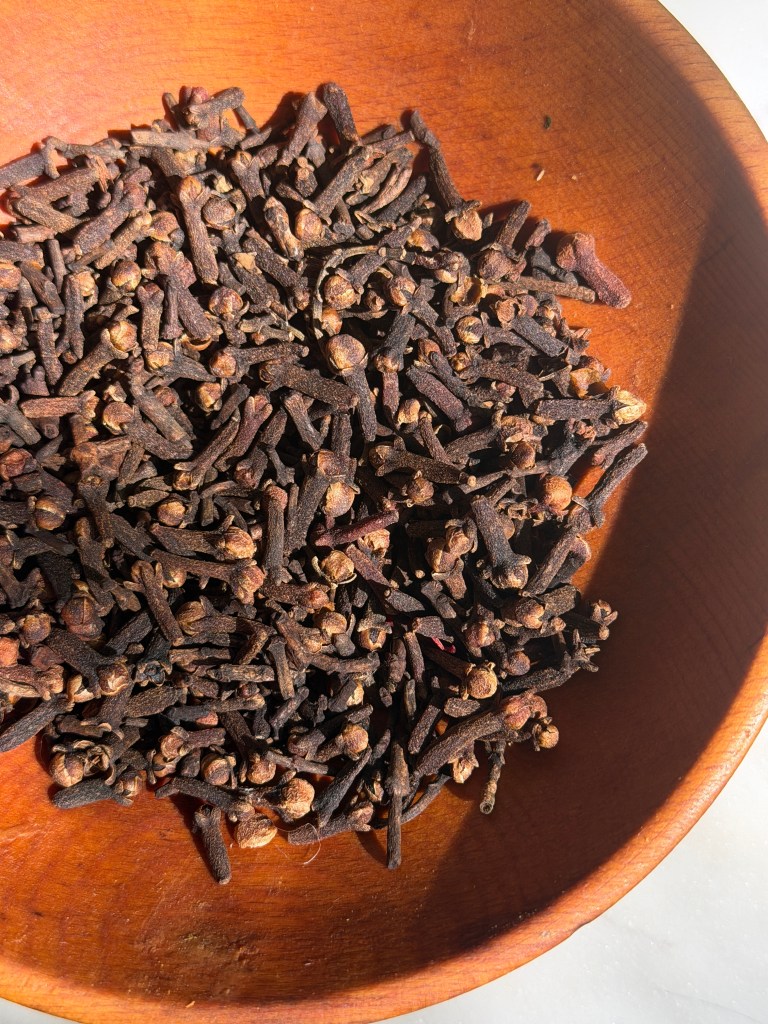
Cloves are especially rich in eugenol, the compound largely responsible for their intense aroma and many of their medicinal associations. They also contain antioxidants, along with minerals such as manganese, and are often described as warming, pungent, and deeply aromatic.
Traditionally, cloves have been used in Chinese medicine and Ayurveda for digestive support, oral care, and general wellness. Their reputation comes from both their distinctive chemistry and their long history of everyday use in food and home remedies.
In Ayurveda, clove is known as a powerful healing spice known for its ushna (warming) and kapha-balancing properties. It helps clear congestion, relieve cough, and support overall respiratory wellness
Some benefits linked to cloves:
- They may help reduce oxidative stress because of their antioxidant content.
- They are associated with anti-inflammatory effects, especially through eugenol.
- They may support digestion and help reduce bloating, gas, and nausea in traditional use.
- They are widely used in oral care because of their antimicrobial and breath-freshening reputation.
- They may help control bacteria and fungi, which is why clove oil and clove extracts are discussed in natural wellness products.
As with any spice used for wellness, cloves are best seen as a helpful food ingredient rather than a cure-all.
For the love of cooking with cloves
A little clove goes a long way. Its flavor is strong, sweet-warm, woody, and slightly peppery, so it is usually used in small amounts in whole or ground form.
Cloves can be used in:
- Spice blends such as garam masala and other curry masalas.
- Vegetarian and non vegetarian dishes, Marinades, and slow-cooked braises.
- Rice dishes, soups, pickles, and stews.
- Baked goods, teas, mulled drinks, and festive desserts.
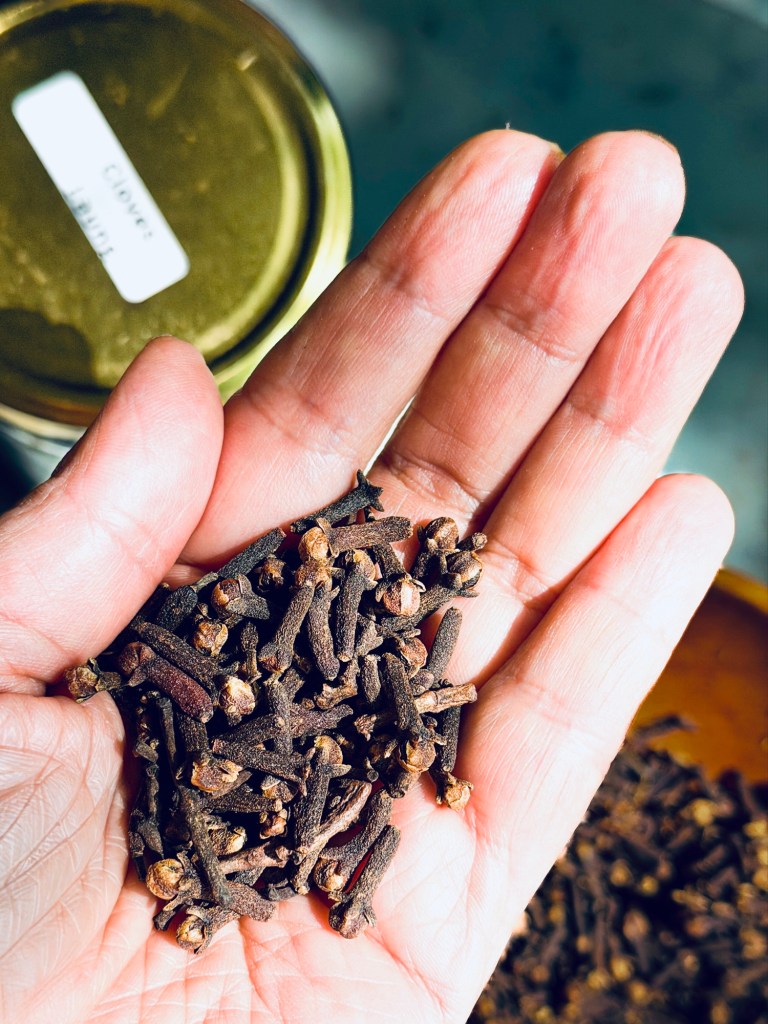
For home cooking, whole cloves are often added at the beginning of cooking and removed before serving, while ground clove is used sparingly in spice blends and baking.
How to use it well
The key to cooking with cloves is restraint. Too much can make a dish bitter or medicinal, so it works best as a background note rather than the lead flavor.
Practical ways to use clove:
- Add 1 to 3 whole cloves to rice, stew, or curry for gentle warmth.
- Blend a small amount into garam masala or Kashmiri-style spice mixes.
- Use ground clove in tiny pinches for baking, chai, or spiced drinks.
- Pair it with cinnamon, cardamom, fennel, ginger, and black pepper for a balanced spice profile.
- Soak a few cloves along with cinnamon and alum powder to make a natural mouthwash
- A simple clove, ginger and cinnamon tea
Special mention: Cloves in Kashmiri cuisine
We have used Cloves in Kashmiri cooking for as long as I can remember so this section is a special call out to the history of the spice in Kashmir and its uses,
Clove spice (known locally in Kashmir as raung or karanfal) traveled to Kashmir through ancient and medieval trade routes. As a highly prized commodity, it passed through a long route involving Southeast Asian traders, Arab merchants, and finally into the Indian subcontinent, eventually reaching the Kashmir Valley.
Clove has a meaningful place in Kashmiri cuisine, where spices are used to create layered fragrance rather than overwhelming heat. Its history in the region is deeply tied to the infusion of Central Asian and Persian influences, providing a “top note” of fragrance and a warming, medicinal quality suited to the cold climate
Historical Origins and Influences
- 15th Century Migration: The foundation of modern Kashmiri cuisine, including the widespread use of aromatic spices like cloves, can be traced back to the 15th-century invasion by Timur. This brought skilled cooks from Samarkand (in modern-day Uzbekistan) to the Kashmir Valley.
- Persian and Central Asian Impact: These cooks, ancestors of the Wazas (traditional Kashmiri chefs), introduced the use of Persian cooking techniques, which heavily utilize cloves, cinnamon, and cardamom to create rich, aromatic flavors.
- Cultural Fusion: The cuisine integrated these foreign influences with existing traditions, resulting in a unique spice profile where cloves provide a savory enhancer and intense aroma to slow-cooked mutton dishes.
Role in Kashmiri Cuisine
- Wazwan Feast: Cloves are essential in the Wazwan, a traditional 36-course banquet. They are integral to dishes like Rogan Josh (lamb in red gravy) and other meat-based specialties, adding an intensity that complements therichness of the dishes.
- Vegetable and lentil dishes, where cloves help balance earthy flavors and add warmth
- Kashmiri Kehwa: Clove is a key component of Kehwa, the traditional fragrant green tea brewed with saffron, cardamom, and cinnamon, typically served to guests
- Medicinal Properties: Due to their warming nature, cloves are valued for helping digestion and providing warmth during cold Kashmiri winters.
- Flavor Profile: The spice is used whole in rice dishes to perfume every grain, or used in Garam Masala to create a unique aroma.
Closing note
Clove is a small spice with a very large history. From ancient Chinese court rituals to Kashmir’s fragrant curries, it has remained a symbol of warmth, preservation, and culinary elegance.
Sources for my research:
https://www.britannica.com/plant/clove
https://www.healthline.com/nutrition/benefits-of-cloves
https://unitproj.library.ucla.edu/biomed/spice/index.cfm?displayID=7


One thought on “Cloves: A Culinary and Healing Profile”