
This post is a love letter to the rooted tradition of drying vegetables in Kashmir’s beautiful snowy valley. It celebrates its rich history. and highlights the many ways this tradition transforms everyday cooking.
This winter, I returned home to Virginia carrying generous gifts of Hokh Syun—vegetables dried with infinite care. Each vegetable bore the loving touch of a family member who had preserved these beautiful vegetables sealing in their deep, earthy, almost smoky aroma.
Thank you to Amber, to Imtiaz and to Feroza for their generous culinary gifts and their love.

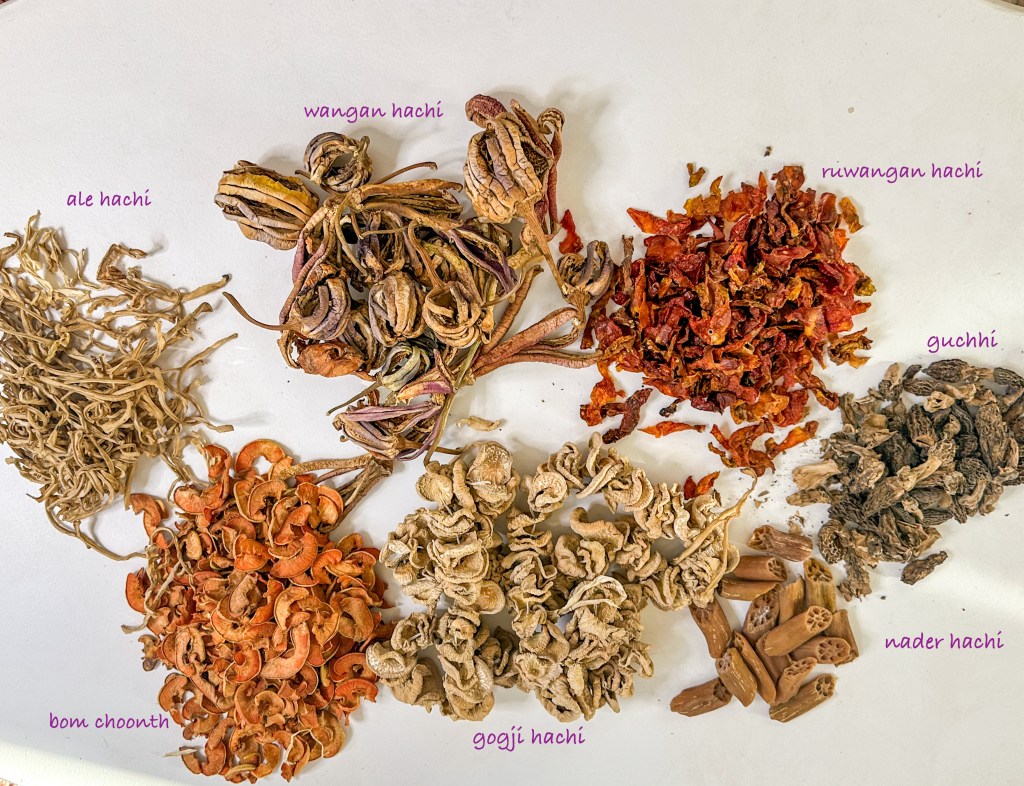
- Wangan Hachi – Eggplant
- Ale Hachi – Bottle Gourd
- Gucchi – Morels
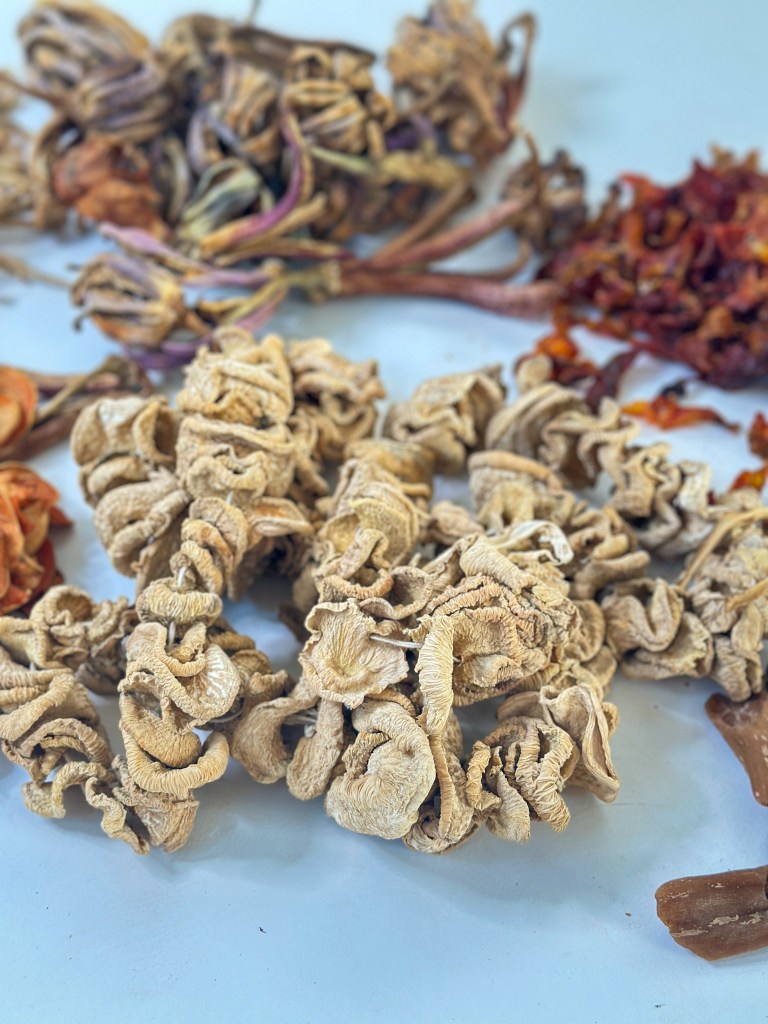
- Gogji Aare – Turnips
- Ruwangan Hachi- Tomatoes
- Nader Hachi – Lotus Root
- Bamchoonth Hachi – Quince
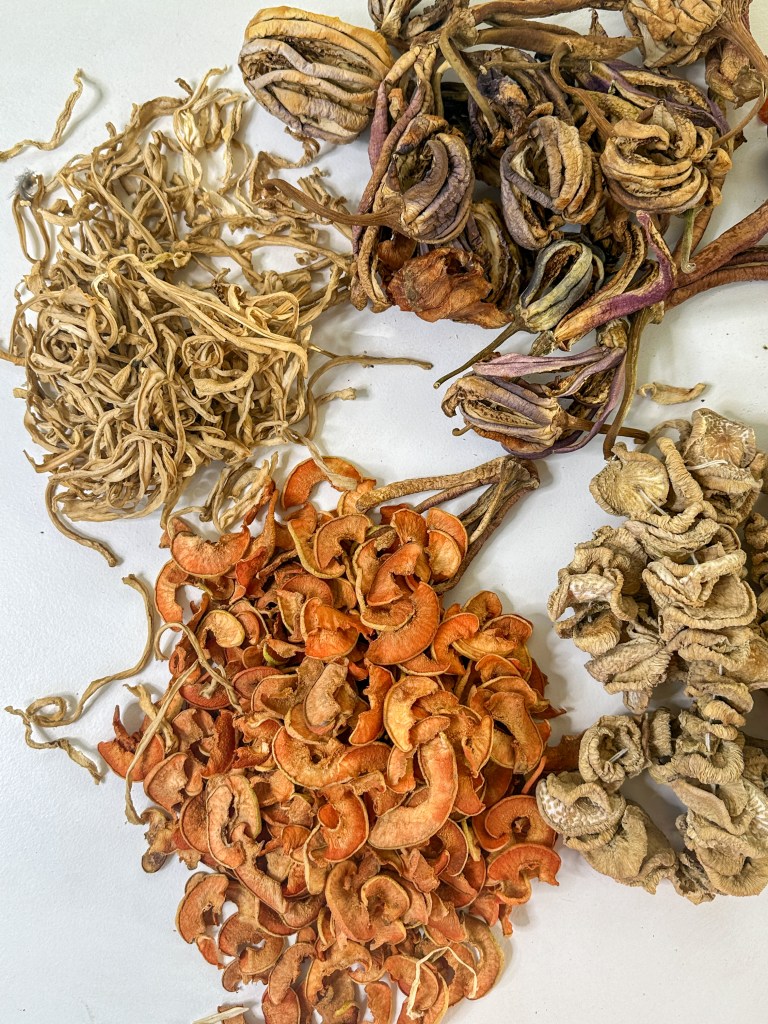
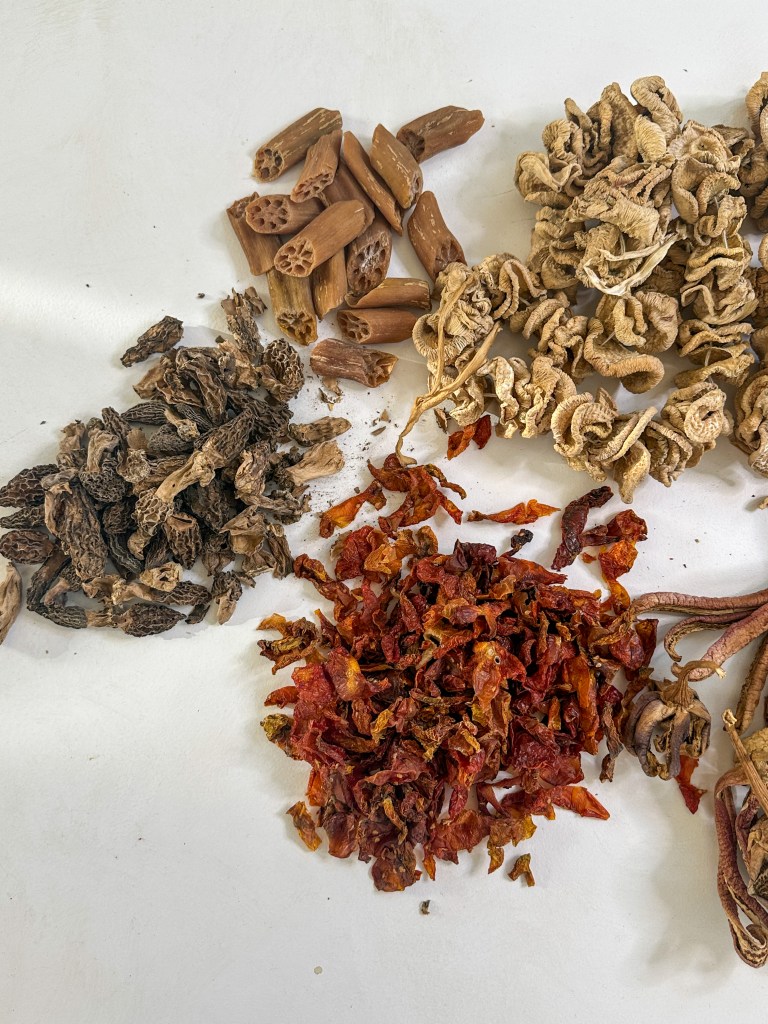
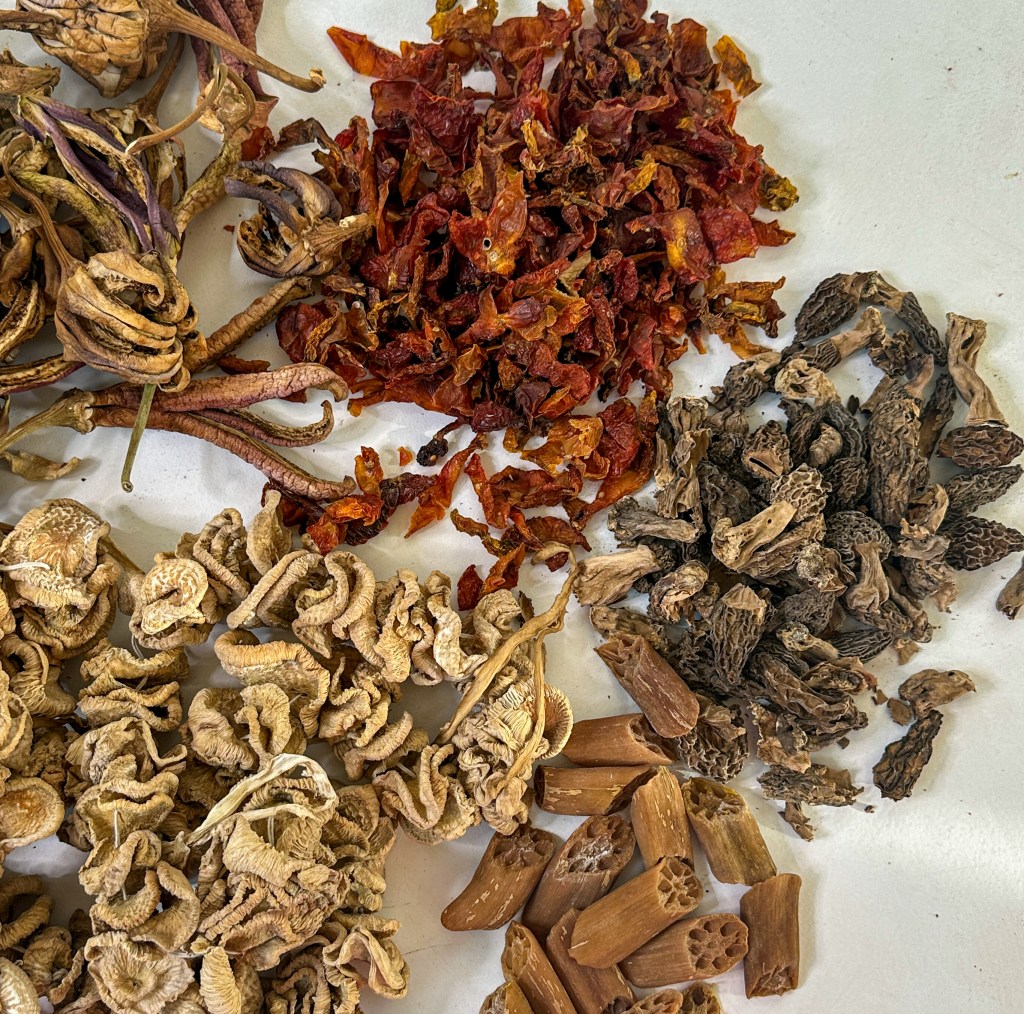
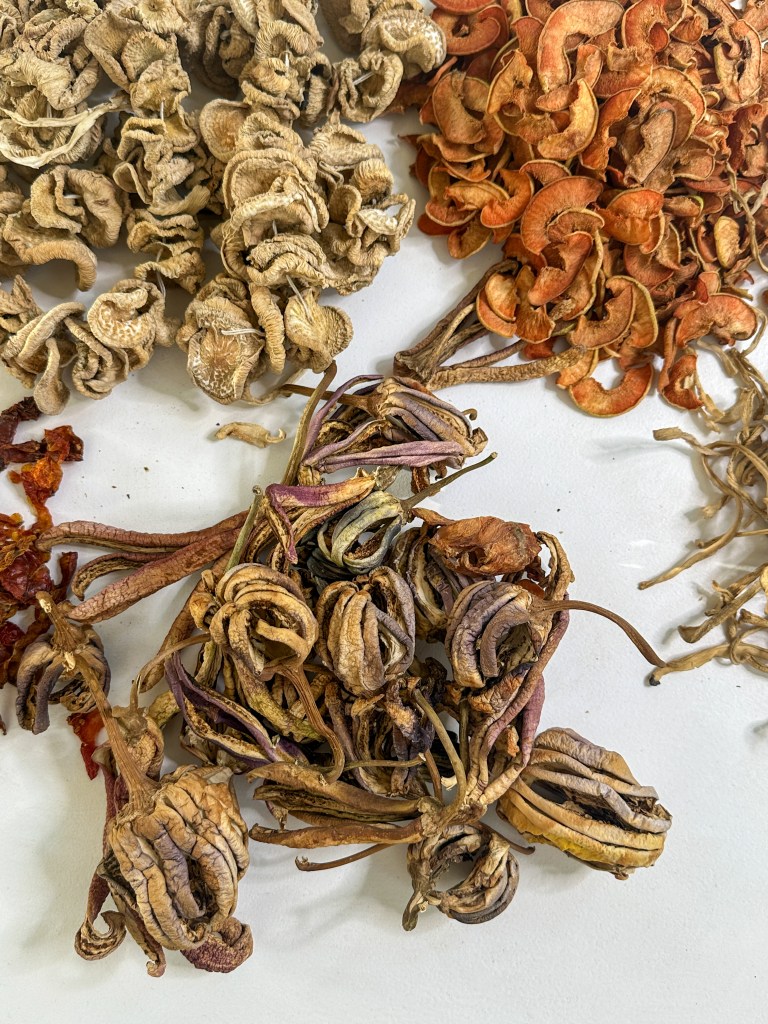
–
A brief history of Hokh Syun
In Kashmir, the practice of drying vegetables and fruits has existed for centuries. It is known as Hokh or Hokh Syun (dried foods). This practice began as a strategy for survival rather than a gourmet choice. Long, harsh winters and heavy snowfall were common. Blocked mountain passes meant that villages be cut off from supplies for weeks. Sometimes snow was six to seven feet deep. Families had to preserve summer abundance to last through the freezing months.
Almost every household once participated in this winter preparation. Women gathered in homes to pluck vegetables from kitchen gardens. Others bought them from local vendors. They would then slice, string, and spread them to dry on rooftops, courtyard walls, and woven wicker trays called kani-chari. Garlands of turnips, peppers, quince, and other produce hanging outside homes were a common sight. Older Kashmiris describe entire neighborhoods decorated with these rustic, edible chains as winter set in.
How vegetables are dried in Kashmir
Kashmir’s drying season begins in the sunny months. This usually occurs from late spring into mid-summer. During this time, the air is dry and the days are long. Vegetables like eggplant, bottle gourd, turnip, tomatoes, peppers, lotus stem, and leafy greens are washed. They are then cut into slices or strips. After that, they are laid out in single layers to dry naturally in the sun. Some vegetables, including turnips and chilies, are threaded into garlands. They are hung along walls or from beams. This allows air to circulate freely around them.
The process is not surprisingly meditative. It involves choosing robust vegetables that can withstand dehydration. Sometimes they are rubbed lightly with salt or spices like fennel. They are turned through the day to dry evenly. After days or weeks, once they are fully dehydrated, they are stored carefully in sacks, cloth bags, or airtight containers. They are protected from moisture and light. This allows them to last the entire winter without refrigeration.
Cultural roots and kitchen memories
Hokh Syun is not just a technique; it is woven into Kashmir’s cultural memory and winter identity. For many families, the distinct aroma of dried vegetables cooking in mustard oil is a symbol of winter comfort. The blend of these spices creates this familiar smell. This aroma is as familiar as the crackle of a kangri (traditional fire-pot). It is also as familiar as the hush of snow outside. Modern supply chains now bring fresh produce into the valley much of the year. However, dried vegetables still maintain their pride of place on winter menus. They are actively traded in markets across Srinagar and beyond.
Food historians and local elders note that urban households may dry fewer vegetables than before. However, the demand for dried vegetables has not vanished. Sellers ship them to regions like Kargil, Leh, and Jammu. This keeps the tradition alive as both cultural heritage and livelihood. In that sense, every packet of dried eggplant or turnip you bring back from Kashmir is not just an ingredient. It is a small piece of an age-old winter story.
Culinary benefits: flavor, nutrition, and versatility
Drying vegetables does far more than simply make them “last longer.” The process removes water and concentrates natural sugars and flavors. This gives dried tomatoes, brinjals, and gourds a deeper, more intense taste. This taste is often described as rich, earthy, and slightly smoky. When rehydrated and cooked, they lend incredible depth to curries and stews. These simple ingredient lists become dishes that taste slow-cooked and complex.
Sun-drying is a gentle, natural method. It preserves many of the vitamins, minerals, and antioxidants. This process allows dried vegetables and fruits to remain nutrient-dense without the need for additives or refrigeration. For households and farmers alike, drying also prevents waste. It turns seasonal surplus into a pantry of ready-to-use ingredients. These can be cooked alone or combined with lentils, meat, eggs, or paneer throughout the year.
Bringing Kashmiri dried vegetables into your kitchen
Kashmiri dried vegetables are incredibly easy to fold into everyday cooking once you understand their rhythm. The first step is always a slow soak in warm water. This allows them to plump up and soften. Sometimes the soaking water is reused to build flavor into the final dish. Once rehydrated, they can be sautéed in oil with aromatics and spices. Then, they are simmered with yogurt, lentils, meat, or just a splash of water. This creates soulful, concentrated gravies that taste like winter comfort in every bite.
There are some great recipes on my blog showcasing Kashmir vegetables but those are mostly fresh, In the upcoming posts on Food for the Soul, those little bundles of sun and snow from Kashmir will be highlighted. They will find their moment in the spotlight. Dried eggplants, gourds, turnips, lotus stems, morels, and more will each be featured.
[display-posts category=”kashmir”

 Food For The Soul
2 thoughts on “Hokh Syun – A Kashmiri dried vegetable tale”